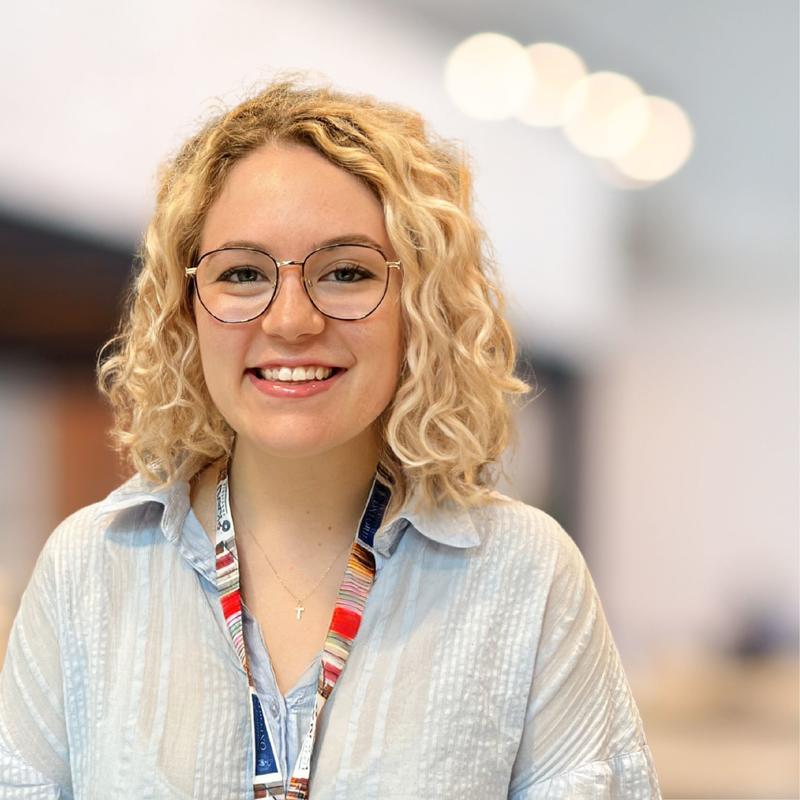
Tia is using an interdisciplinary approach to investigate how small changes in glycosaminoglycan structure can have a large effect on the infectivity of viruses, specifically focussing on Nipah Virus. Having originally come from a Structural Biology background, Tia was keen to learn new biophysical and chemistry methodologies to complement and enhance her research. This is what drove her to the Struwe Lab, which combines a group of highly driven scientists using multiple techniques to answer big questions in glycobiology. Tia will combine different types of mass spectrometry and cryo-electron microscopy to research this topic, working both at the Kavli Institute and the Rosalind Franklin Institute.
Underpinning Tia’s research interests are her aspirations to generate a medical impact with her research. By deciphering how viruses are able to interact with glycosaminoglycans, this will not only improve understanding of viral pathology, but also aid development of new therapeutic agents and repurpose currently available drugs for treating these diseases. For Nipah virus this is especially pertinent due to a lack of approved therapies and the LIC localisation of disease outbreaks. She hopes to use her DPhil to help establish a career in interdisciplinary research that can enact positive change in the scientific and medical world.
Tia is a DPhil student on the Rosalind Franklin Institute programme, looking at how glycosaminoglycan structure perturbs viral infectivity. She is grateful to be supervised by Associate Professor Weston Struwe, Dr Liang Wu and Associate Professor Shabaz Mohammed. She recently graduated from the University of St Andrews, having obtained an Integrated Master’s in Biochemistry (MBiochem). Tia’s master’s project was in Professor David J. Harrison’s lab and in collaboration with cancer therapeutics company Nucana®, focussing on understanding the molecular mechanism behind the anti-cancer action of NUC-7738 in clear cell Renal Cell Carcinoma. During her degree, Tia also completed a placement year at the drug discovery company Sosei Heptares©, where she used lipid cubic phase crystallography to help solve the structure of a novel G protein-coupled receptor.